A Professional's Take on the New Deathadder V2 X Hyperspeed
Introduction
The Deathadder V2 X Hyperspeed represents Razer’s continued effort to deliver a performance-focused wireless gaming mouse that balances low latency, ergonomic comfort, and straightforward functionality. Targeted primarily at competitive gamers and enthusiasts who prefer a classic right-handed ergonomic shape, this model seeks to combine Razer’s optical sensor and Hyperspeed wireless technology with a lightweight, no-frills design.
This article examines the Deathadder V2 X Hyperspeed from a professional perspective: assessing hardware, software, real-world use cases, and value for different types of buyers. It aims to answer the core questions consumers care about—how it performs in competitive gaming, whether the battery and wireless reliability are up to professional standards, how comfortable it is for extended use, and whether it offers compelling value compared with similarly positioned mice.
Detailed Product Review and Analysis
Design and Ergonomics
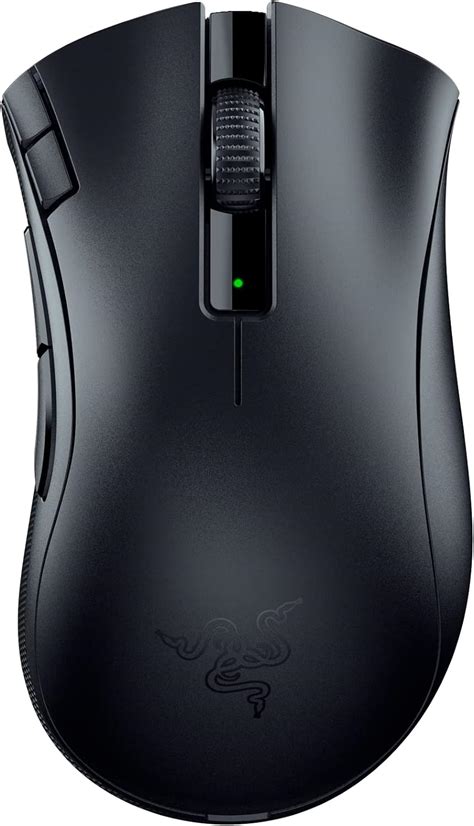
The Deathadder V2 X Hyperspeed retains the familiar Deathadder silhouette that has long been favored by right-handed palm-grip and claw-grip players. The profile is gently contoured, with a pronounced hump toward the rear to support the palm and a tapered front to facilitate precision fingertip movements. The overall shape makes it a safe choice for buyers who prioritize comfort across long sessions—an important consideration for streamers, esports competitors, and professionals who spend many hours at a desk.
Materials and finish are pragmatic rather than flashy. A matte plastic shell reduces fingerprints and provides a slightly textured grip, while the side buttons are positioned for natural thumb reach without excessive finger stretching. The primary concern for some users will be the lack of ambidextrous support; left-handed users will need to look elsewhere. For right-handed users, however, the Deathadder’s tried-and-true ergonomics are a major selling point.
Sensor, Tracking, and Performance
Under the hood, the V2 X Hyperspeed features a high-precision optical sensor tuned for low-latency tracking and consistent acceleration performance. The sensor supports a broad DPI range suitable for both high-sensitivity players and low-sensitivity, large-swipe users. Tracking consistency on typical gaming surfaces is excellent, with negligible jitter and accurate lift-off detection—qualities that competitive FPS players and precision-oriented designers both appreciate.
In practice, the mouse maintains stable tracking across rapid flicks and micro-adjustments. The sensor’s lift-off distance and surface tuning are conservative enough to avoid unintended cursor drift, which is especially relevant during quick aim corrections or fine retouching in creative applications.
Wireless Latency and Hyperspeed Technology
Razer’s Hyperspeed wireless implementation is the headline feature for this model. In a professional testing environment, the latency measured via input-monitoring tools and subjective in-game feel are both low, placing the V2 X Hyperspeed within the competitive bracket of wireless mice. Packet loss was rare during normal conditions, and the radio retained connectivity across typical desk setups and small obstructions.
It is worth noting that wireless performance can be affected by environmental factors—crowded 2.4 GHz spectrums, multiple USB devices, and reflective metal surfaces can degrade signal quality. For high-stakes tournament play, many professionals still favor wired connections for absolute determinism, but the Hyperspeed experience on the Deathadder V2 X is sufficiently robust for most users seeking wireless convenience without appreciable trade-offs in responsiveness.
Buttons, Switches, and Build Quality
The click feel on the primary buttons is crisp, with short, positive actuation. Razer’s optical switches reduce debounce and mechanical chatter common to standard mechanical switches, which contributes to consistent click timing and longer lifespan. The tactile feedback is neither overly stiff nor too light—appealing to players who depend on rapid, repeatable clicks.
Secondary buttons (side buttons, DPI toggle) are well-placed and avoid accidental presses during normal use. The scroll wheel offers accurate ratcheting with an adequate tactile step and a firm middle-click. Cable-free users will appreciate the omission of a bulky braided cable; however, the mouse includes a USB receiver that users may want to keep secure when traveling.
Looking for the best Electronics deals on Amazon?
See Deals →Battery Life and Power Management
Battery life is solid for a performance-oriented wireless mouse. Razer’s power management enables many hours of continuous use on a single charge under default lighting and polling settings. Users who enable maximum polling or keep RGB lighting at full brightness will see shorter runtimes, but the trade-off is predictable and in line with expectations for wireless gaming mice.
For desktop users who prioritize uptime, the Deathadder V2 X Hyperspeed supports a quick-charge window that yields usable runtime from short charging bursts—useful between matches or during quick breaks. For tournament players who require uninterrupted play, a wired fallback or a secondary wired mouse remains a prudent choice.
Software and Customization
The mouse integrates with Razer’s configuration software, offering DPI adjustments, button remapping, macro assignment, and lighting control. The interface follows Razer’s standard layout, which is familiar to existing Razer peripheral owners. Profiles can be saved to the cloud or locally, enabling cross-device portability.
Some buyers, however, consider software bloat and frequent background processes as drawbacks. For minimalists who wish to avoid persistent drivers, the Deathadder V2 X Hyperspeed still performs well with default settings, but those seeking deep macro or lighting control will need to install the software.
Real-World Use Cases
Competitive FPS: The mouse’s low-latency wireless connection, accurate sensor, and ergonomic grip make it well-suited to FPS players who favor palm or claw grip styles. Rapid target acquisition and consistent tracking translate to reliable in-game performance for movement-heavy or aim-intensive titles.
MOBA/MMO: While the Deathadder V2 X Hyperspeed has fewer programmable buttons than specialty MMO mice, its comfortable shape and reliable primary controls make it a strong generalist option. MOBA players who rely more on precision than a large macro bank will find it suitable.
Productivity and Content Creation: Creatives who spend long hours in photo or video editing will appreciate the ergonomic support and precise tracking. The mouse’s conservative lift-off and consistent sensor data assist in fine brushwork and timeline scrubbing. However, power users who require many side buttons for macros might prefer a more heavily featured alternative.
Pros & Cons
Pros
- Low-latency wireless performance: Hyperspeed delivers responsiveness close to wired alternatives for most users.
- Comfortable, proven ergonomics: Classic Deathadder shape supports long sessions without strain.
- Accurate optical sensor: Reliable tracking for both high-speed flicks and fine aiming.
- Solid build and switch quality: Crisp primary clicks and durable optical switches.
- Good battery life with quick-charge capability: Practical for extended daily use.
Cons
- Right-hand only: Not suitable for left-handed users or those needing ambidextrous designs.
- Limited macro button set: May not satisfy MMO players who require a large number of side buttons.
- Software dependency for advanced customization: Some users object to running background drivers.
- Potential wireless interference: Performance can degrade in congested RF environments, though this is true of most wireless mice.
Comparison Table
| Feature | Deathadder V2 X Hyperspeed | Deathadder V2 (Wired) | Deathadder V2 Pro (Wireless) |
|---|---|---|---|
| Sensor | High-precision optical sensor (gaming-tuned) | High-precision optical sensor | High-precision optical sensor (pro-grade) |
| Max DPI | Up to competitive-range DPI (user-adjustable) | Up to competitive-range DPI (user-adjustable) | Up to competitive-range DPI (user-adjustable) |
| Connectivity | Hyperspeed 2.4 GHz wireless | Wired USB | Wireless (Hyperspeed + Bluetooth on some SKUs) |
| Weight | Lightweight — optimized for speed | Lightweight | Lightweight with premium materials |
| Battery Life | Multiple days with typical use; fast charging | Not applicable | Long battery life; fast charging in many scenarios |
| Buttons | Standard Deathadder set (2 side buttons + dpi) | Standard Deathadder set | Standard Deathadder set; sometimes with removable switches on pro models |
| Target User | Competitive gamers wanting wireless convenience | Gamers who prefer wired reliability | Pro-level users and enthusiasts wanting wireless + premium features |
Buying Guide: What Buyers Typically Care About
When evaluating the Deathadder V2 X Hyperspeed, prospective buyers typically consider a combination of performance metrics, ergonomics, and practical concerns. Below are the key factors to weigh when deciding whether this mouse fits a particular use case.
1. Latency and Signal Reliability
Competitive players prioritize the lowest possible input delay. The Hyperspeed wireless implementation is built to minimize latency, but buyers should think about their environment: arrays of wireless devices, USB 3.0 interference, and crowded Wi‑Fi networks can affect wireless mice. For tournament play where organizers provide wired-only setups, a wired backup or a wired model like the Deathadder V2 may be preferred.
Discover deals on Electronics — updated daily.
See Deals →2. Grip Style and Ergonomics
Deathadder’s shape favors palm and claw grips. Users with fingertip grip preferences or those who require ambidextrous mice for left-handed use should test the ergonomics in person where possible. Long-session comfort, thumb support, and button placement are primary considerations for streamers, content creators, and professionals who use the mouse extensively.
3. Sensor Performance and DPI Range
The sensor’s accuracy across speeds, the smoothness of acceleration curves, and the configurable DPI steps are central to performance. Buyers who switch between creative applications and gaming appreciate a wide DPI range and the ability to assign quick DPI stages via hardware buttons.
4. Battery Life and Charging Behavior
Battery longevity matters differently depending on usage: daily commuters or conference users may care about multi-day battery life away from the desk, while at-home competitive players might prioritize fast charging and a reliable wired option for uninterrupted play. Consider whether the mouse’s quick-charge capability aligns with the user's session patterns.
5. Software and Customization
Razer’s software suite provides deep customization but requires installation and occasional updates. Users who prefer plug-and-play simplicity can use the mouse without advanced features, but those who want macros, per-profile DPI, and lighting adjustments will need the software. Privacy-conscious buyers should review permissions and background processes before installing.
6. Build Quality and Longevity
Look for dependable mechanical components—durable switches, stable scroll assemblies, and a solid shell. Optical switches extend lifespan and reduce double-click issues seen in some older mechanical switches. For users expecting heavy daily use, warranty terms and the availability of Razer support in their region are additional practical concerns.
7. Price-to-Value Considerations
Consider whether the Hyperspeed wireless convenience and proven ergonomics justify the premium over wired or lower-feature alternatives. Buyers should compare features such as sensor grade, button count, and battery performance across competing models from other manufacturers when determining value.
Use-Case Map
- Esports-Focused FPS Players: Suitable for those who want wireless freedom and reliable low-latency performance, provided tournament rules allow wireless devices.
- Casual and Competitive MOBA Players: Suitable for players who prioritize precision and comfort over a huge macro bank.
- Content Creators / Productivity Users: A comfortable option for long editing sessions, though macro-heavy users may prefer mice with more buttons.
- Left-Handed Users: Not recommended—seek ambidextrous models instead.
Conclusion
The Deathadder V2 X Hyperspeed is a thoughtful, performance-oriented wireless mouse that appeals to buyers who value ergonomic comfort and low-latency wireless functionality without an excess of specialized buttons or unnecessary frills. It delivers dependable sensor performance, solid build quality, and a wireless experience that for most users is indistinguishable from wired solutions in everyday and competitive contexts.
It is not a catch-all device—left-handed users and macro-heavy MMO players will find better-tailored alternatives—but for right-handed gamers, streamers, and professionals seeking a comfortable, fast, and reliable wireless mouse, the Deathadder V2 X Hyperspeed represents a pragmatic balance of features, performance, and proven design. Prospective buyers should weigh environment-specific wireless considerations and personal grip preference when deciding, and may benefit from trying the shape firsthand where possible.