Biggest Agile CRM Buying Mistakes (And How to Avoid Them)
In the high-stakes world of the electronics industry, where product lifecycles are brief and technical specifications are complex, maintaining a streamlined sales and support pipeline is not just a luxury—it is a survival requirement. Whether a company is distributing semiconductor components, manufacturing consumer audio gear, or managing a fleet of enterprise-grade hardware, the Customer Relationship Management (CRM) system acts as the central nervous system of the operation. Agile CRM has emerged as a frequent choice for these firms due to its "all-in-one" promise, blending sales, marketing, and service automation into a single interface. However, the path to a successful implementation is fraught with common pitfalls that can lead to wasted capital, frustrated engineering teams, and fragmented customer data.
The electronics sector faces unique challenges: long B2B sales cycles, the need for rapid technical support, and complex supply chain integrations. When a buyer approaches Agile CRM, they often look at the attractive price point and the breadth of features without auditing how those features map onto the specific workflows of hardware distribution and electronics sales. This article explores the most significant mistakes made during the acquisition and deployment of Agile CRM and provides a roadmap for avoiding them to ensure your investment delivers a high return on investment (ROI).
The Dilemma of Over-Engineering the Setup
One of the most frequent mistakes electronics firms make when adopting Agile CRM is attempting to replicate every single nuance of their existing, often manual, process into the digital environment on day one. Electronics sales often involve "design-ins," where a component must be approved by a client's engineering team before a bulk order is placed. This is a multi-stage process involving technical discovery, sample shipping, and compliance verification. While Agile CRM is highly customizable, new buyers often make the mistake of creating dozens of custom fields and mandatory data entry points that hinder, rather than help, the sales team.
When the software becomes too cumbersome, sales engineers—who are frequently more focused on technical specs than data entry—begin to bypass the system. This leads to the "Dark CRM" phenomenon, where the most valuable deal intelligence exists in emails and spreadsheets rather than the centralized system. To avoid this, buyers must focus on a "Minimum Viable CRM" approach. Start by automating the most repetitive tasks—such as follow-ups after a data sheet is downloaded—and gradually add complexity as the team becomes comfortable with the interface.
Detailed Product Analysis: Agile CRM in the Electronics Vertical
Agile CRM positions itself as a unified platform, which is a major draw for electronics businesses that have traditionally struggled with "Franken-stack" software configurations—where Mailchimp handles the newsletters, Zendesk handles the tech support, and a legacy CRM handles the leads. The primary strength of Agile CRM for this industry lies in its tight integration between the help desk and the sales automation tools.
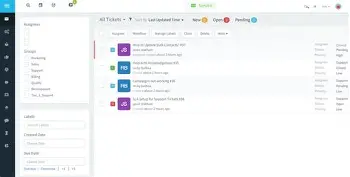
For an electronics manufacturer, the customer journey is rarely linear. A client might start as a lead, become a high-volume purchaser, and then frequently interact with the support team for firmware updates or warranty claims. Agile CRM allows the sales team to see support tickets in real-time. This prevents the common embarrassment of a sales rep calling a client to pitch a new product while that client is currently experiencing a critical failure with an existing piece of equipment. The visibility provided by the platform’s unified timeline is its most significant asset.
Furthermore, the marketing automation suite within Agile CRM is particularly effective for nurturing leads in the electronics space. Since many buyers are looking for specific technical attributes, the ability to tag users based on the specific category of components they view on your website allows for highly targeted email campaigns. Instead of sending a generic "New Products" blast, a firm can send a specialized white paper on "Thermal Management in Power Inverters" only to the engineers who have shown interest in that specific sub-sector.
Key Features for Hardware and Electronics Sales
The Gamification feature is an underrated aspect of Agile CRM that can be highly effective for electronics distributors. Sales in this sector can be grueling, often involving hundreds of calls to source new procurement officers. By setting up leaderboards and milestones within the CRM, managers can maintain high morale and drive productivity without manual tracking. Additionally, the Project Management module allows teams to track the "Design-Win" process post-sale, ensuring that after the deal is closed, the shipping and integration milestones are met on schedule.
However, an area where electronics buyers often struggle is the reporting engine. While Agile CRM offers robust standard reports, the complex forecasting required for hardware—taking into account lead times and manufacturing capacity—often requires advanced custom reporting that may necessitate the use of Agile’s API. Failing to account for this technical setup time is a mistake that frequently delays full adoption.
Pros and Cons of Agile CRM
- Pro: Unified Customer View - Integrating sales, marketing, and service in one place ensures that every department has the same context, reducing data silos.
- Pro: Cost-Effective Scalability - The pricing structure is significantly more accessible for small-to-medium electronics manufacturers compared to enterprise giants like Salesforce or Oracle.
- Pro: Built-in Telephony - Features like one-click calling and call recording are vital for sales teams managing international accounts and complex technical consultations.
- Pro: Web Engagement Tools - Pop-ups and web forms that sync directly to the CRM help capture technical leads directly from product data sheet pages.
- Con: Learning Curve for Advanced Automation - The visual designer for marketing automation is powerful but can be unintuitive for users who are not technically inclined.
- Con: Limited Native ERP Integrations - For electronics firms, the CRM needs to talk to the inventory management/ERP system. Agile CRM requires third-party tools like Zapier for many of these connections, which can add cost and complexity.
- Con: UI Friction - While functional, the interface can occasionally feel cluttered when managing accounts with hundreds of associated contacts and technical documents.
Mistake: Neglecting the Technical Support Integration
In electronics, the sale is often just the beginning. Post-purchase support is a massive driver of brand loyalty and repeat business. A major mistake buyers make when purchasing Agile CRM is treating it only as a "Sales" tool and ignoring the "Service" side. They might continue to use a separate system for handling RMA (Return Merchandise Authorization) requests or technical troubleshooting.
Looking for the best Electronics deals on Amazon?
View Offers →By failing to utilize the Agile CRM Help Desk, the company loses the "Feedback Loop." When engineering teams see recurring issues in the CRM's support tickets, they can relay that information to the marketing team to create better instructional content, or to the sales team to manage expectations. Avoiding this mistake requires a commitment to migrating the support team onto the platform simultaneously with the sales team. The "Ticket-to-Deal" visibility is what ultimately transforms a CRM from a contact list into a strategic business asset.
Comparison of Agile CRM against Common Competitors in Electronics
When selecting a CRM for an electronics-focused business, it is helpful to see how the "all-in-one" approach stacks up against other popular market alternatives. The following table highlights key differences in areas that matter most to hardware and tech-heavy firms.
| Feature / Metric | Agile CRM | HubSpot (Professional) | Pipedrive | Zoho CRM |
|---|---|---|---|---|
| Primary Focus | All-in-One (Sales, Marketing, Service) | Inbound Marketing & Sales | Sales Pipeline Management | Broad Business Suite |
| Telephony Integration | Built-in (Native) | Built-in | Marketplace Add-on | Built-in |
| Project Management | Included (Basic) | Not included natively | Separate module | Separate app (Zoho Projects) |
| Pricing Flexibility | Very High (Cost effective) | Medium (Expensive at scale) | High | High |
| Complexity of Setup | Moderate | Low to Moderate | Low | Moderate to High |
As indicated by the comparison, Agile CRM occupies a unique middle ground. While Pipedrive might be better for a company that only cares about moving deals through a pipeline, and HubSpot might offer a slicker marketing interface, Agile provides a broader set of tools (including basic project management) for a significantly lower price point, which is crucial for electronics businesses managing tight margins on physical goods.
Mistake: Underestimating Data Cleanliness in Component Databases
Modern electronics companies often deal with thousands of SKUs and a massive database of past leads from trade shows and web inquiries. A catastrophic mistake is "dumping" an uncleaned database into Agile CRM during the initial setup. Because Agile CRM uses automated triggers—such as sending an email when a contact is added to a specific "Tag"—a dirty database can trigger thousands of irrelevant or duplicate emails to your most important clients.
Furthermore, electronics buyers often care about specific metadata: Part numbers, lead times, and compliance certifications (RoHS, REACH). If these are not structured correctly before import, the search and filter functions in the CRM become useless. To avoid this, dedicate a week to data scrubbing. Map your existing data to Agile's custom fields specifically designed for your technical specs. It is much easier to import clean data once than to manually merge 5,000 duplicate contacts after the system is live.
Buying Guide: Choosing the Right Agile CRM Tier for Your Electronics Firm
Selecting the right plan is where many buyers either overspend or find themselves limited by missing features. For most electronics firms, the choice falls between the "Regular" and "Enterprise" tiers. Here is how to evaluate the decision based on your specific business model.
Small Distributors and Startups
If you are a small team of 2-5 people focusing on boutique audio components or specialized sensors, the Starter or Regular tiers are usually sufficient. At this level, you mostly need the 2-way email sync and the ability to track deals. The mistake here is paying for the Enterprise tier before you have the volume to justify the advanced automation features. Agile CRM allows for easy upgrades, so starting lean is the smarter play.
Mid-Sized Manufacturers and Large Distributors
For firms managing high-volume B2B accounts with multiple decision-makers at each company, the Enterprise tier becomes a necessity. This is due to the "Account-Based Marketing" (ABM) capabilities and the increased number of automation rules. In the electronics world, you are often selling to a "buying committee"—the lead engineer, the procurement manager, and the CFO. The Enterprise tier allows you to group these contacts together more effectively to see the health of the entire account, rather than just isolated individuals.
Integration Requirements
Before purchasing, audit your existing toolchain. Do you use QuickBooks or Xero for invoicing your hardware sales? Do you use Slack for internal engineering communication? Agile CRM supports these, but you should verify that the specific data you want to pass back and forth is supported by the native integration. If not, budget for an integration specialist who can use the Agile API to bridge the gaps.
Find top-rated Electronics products at great prices.
Shop Amazon →Mistake: Ignoring Mobile Functionality for Field Sales
In the electronics industry, sales aren't always made behind a desk. Sales reps often visit client factories, attend technical trade shows like CES or Electronica, and conduct on-site demonstrations. A major buying mistake is failing to train the team on the Agile CRM mobile app. If the rep has to wait until they get back to the hotel to log the notes from a meeting, those details—specifically the nuanced technical requirements of the client—often get lost.
Agile CRM’s mobile app includes a "check-in" feature and the ability to scan business cards directly into the system. For an electronics firm, this means a lead captured at a booth can be immediately entered into a marketing automation sequence before the rep even leaves the convention center floor. Neglecting this feature during the evaluation phase often leads to the same old problem of "lost leads" that plagued the company before the CRM was ever purchased.
The Importance of Lead Scoring for Technical Hardware
Not all leads are created equal. An engineering student downloading a data sheet for a school project is a very different "lead" than a procurement officer from a major automotive manufacturer downloading the same file. One of the biggest mistakes firms make with Agile CRM is failing to implement Lead Scoring. They treat every download or email click as a "hot" lead, which results in the sales team wasting hours on calls that will never convert.
Within Agile CRM, you can set up automated scoring rules. For example:
- Email address contains a ".edu" domain? Subtract 20 points.
- Job title contains "Procurement" or "Senior Engineer"? Add 30 points.
- Visited the "Bulk Pricing" page three times? Add 50 points and alert a sales rep.
By automating this prioritization, the electronics sales team can focus their technical expertise where it has the highest probability of closing a high-value contract. Avoiding the "manual-sorting" mistake is perhaps the single biggest productivity booster available within the software.
Conclusion: Building a Scalable Digital Foundation
The electronics industry is defined by precision and speed. Implementing a tool like Agile CRM can either be the catalyst for a new era of growth or a source of ongoing operational friction. The difference lies in the strategy behind the purchase. By avoiding the common mistakes of over-engineering the initial setup, neglecting data cleanliness, and ignoring the importance of post-sale support integration, firms can create a truly unified system that grows alongside their product line.
Agile CRM offers a formidable suite of tools that, when configured with the specific needs of electronics buyers in mind, provides a level of insight and automation that was previously reserved for companies with enterprise-level budgets. The key is to remember that the CRM is a tool to support your sales and engineering teams, not a hurdle for them to clear. Focus on clean data, clear workflows, and a holistic view of the customer journey, and your investment in Agile CRM will serve as a robust foundation for years of technical sales success.
As you move forward with your implementation, keep a close eye on the "Sales-to-Service" handoff. In the world of hardware, where technical support and reliability are the cornerstones of a brand's reputation, the ability to see a customer’s entire history in one window—from their first website visit to their most recent firmware troubleshooting ticket—is the ultimate competitive advantage. Avoid the pitfalls, embrace the automation, and let your CRM handle the administrative heavy lifting so your team can focus on what it does best: innovating for the future of electronics.