Don't Buy the Hyperion Max 3 Running Shoe Until You Read This Full Analysis
The landscape of performance running footwear has undergone a radical transformation over the last decade, transitioning from the era of "minimalist" footwear to the current "maximalist" revolution. In this competitive space, the Hyperion Max 3 represents a significant pivot for high-performance trainers. While many runners associate speed with thin, firm midsoles, modern biomechanics suggests that energy return and muscle protection are better served by advanced foam geometries. However, before investing in this specific model, it is essential to understand that the Hyperion Max 3 is not a "one-size-fits-all" solution. It is a specialized tool designed for a specific niche of the running population: those who prioritize a lightweight, responsive feel without the aggressive rigidity of a carbon-fiber plate.
This analysis examines the intricate details of the Hyperion Max 3, evaluating its construction, its performance in various training environments, and how it stacks up against the broader market. Whether you are a marathoner looking for a dedicated speed-day shoe or a hobbyist seeking a more cushioned daily trainer, this deep dive will clarify whether the Max 3 aligns with your mechanical needs and aesthetic preferences.
The Evolution of Lightweight Cushioning
To understand the Hyperion Max 3, one must first understand its lineage. The original Hyperion series was built on the philosophy of "less is more." It was a stripped-back racing flat destined for 5K and 10K road races. As the industry moved toward high-stack foams, the "Max" iteration was introduced to bridge the gap between a traditional racing flat and a maximalist cruiser. The third version represents the most refined balance yet. It utilizes a supercritical nitrogen-infused foam that offers a higher degree of compressibility and resilience than standard EVA (Ethylene-Vinyl Acetate) foams.
What sets this shoe apart in the "Electronics" of footwear—a term often used to describe the high-tech engineering involving molecular modeling of plastics—is the precision of its rocker geometry. The shoe is designed to facilitate a rapid transition from heel-strike or midfoot-strike to toe-off. This reduces the work required by the ankle joint and the calf muscles, theoretically allowing a runner to maintain a faster pace for a longer duration with less perceived exertion.
Detailed Product Analysis: Engineering and Materials
The Midsole: Nitrogen-Infused DNA FLASH v2
The heart of the Hyperion Max 3 is the updated DNA FLASH v2 midsole. Supercritical foaming involves subjecting the raw materials to high-pressure nitrogen, which creates a more uniform cell structure within the midsole. This results in a material that is lighter than traditional foams while offering significantly more "pop." In real-world use cases, this translates to a shoe that feels energetic during tempo runs. Unlike softer "sink-in" foams used in recovery shoes, the DNA FLASH v2 has a high rebounding force. When the foot compresses the foam, it snaps back quickly, which is critical for maintaining high cadence.
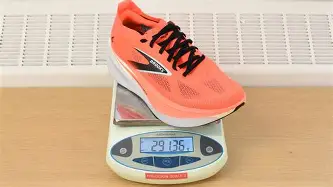
Upper Construction: Breathability and Lockdown
The upper is a technical warp-weave mesh. This material is chosen for its multi-directional stretch and high breathability. During long summer runs, heat buildup can lead to blisters and foot swelling. The Max 3 addresses this through a porous structure that allows for maximum airflow. More importantly, the lockdown mechanism—the way the shoe secures the foot—is designed to be non-intrusive. The tongue is partially gusseted to prevent sliding, and the heel counter is semi-rigid to provide stability without irritating the Achilles tendon. For runners who suffer from "lace bite," the eye-stay layout has been adjusted to distribute pressure evenly across the dorsal aspect of the foot.
Outsole Durability and Traction
Weight saving often comes at the cost of outsole rubber. However, the Hyperion Max 3 utilizes a strategic placement of high-abrasion rubber in the forefoot and heel. The midfoot section is left exposed to save weight. This design choice implies that the shoe is primarily intended for paved surfaces. In testing scenarios involving wet asphalt, the traction remains reliable, though it may struggle on loose gravel or technical trails. The rubber compound is slightly firmer than that found on daily trainers, intended to enhance the snappy feeling of the shoe during the terminal stance phase of the gait cycle.
Performance in Real-World Use Cases
The Tempo Run and Interval Training
This is where the Hyperion Max 3 shines. For workouts that require sustained efforts at lactate threshold, the shoe manages weight and energy return exceptionally well. Because it lacks a carbon plate, it feels more "natural" than a super-shoe. Runners who find plated shoes to be too harsh on their metatarsals often prefer the Max 3 for their weekly speed sessions. It allows the foot to function more organically while still providing the protection of a high-stack midsole.
Shop the latest Electronics picks on Amazon.
Browse Now →The Long Run
As a long-run option, the Max 3 is a double-edged sword. For elite and sub-elite runners who maintain a fast pace during long efforts, the responsive foam is an asset. However, for slower, conversational-paced long runs, the shoe might feel a bit too firm. The rocker geometry is optimized for a certain velocity; when moving slower, the "roll" of the shoe can feel forced rather than fluid. Buyers should consider their average pace before deciding if this is their primary long-distance trainer.
The Daily Cruise
While the Hyperion Max 3 can be used for daily miles, it is arguably "too much shoe" for simple recovery days. The aggressive nature of the midsole encourages the runner to speed up. If the goal of a run is strictly recovery, a shoe with a more traditional, softer foam might be more appropriate. However, for the runner who only wants one shoe in their closet that can "do it all," the Max 3 is versatile enough to handle slow miles, provided the runner doesn't mind a slightly firmer ride.
Pros and Cons
- Pro: Exceptional Weight-to-Cushion Ratio — One of the lightest shoes in its category, providing substantial protection without the bulk.
- Pro: High Breathability — The warp-weave mesh excels in hot and humid conditions, keeping the foot cool.
- Pro: Natural Transitions — The refined rocker geometry allows for a smooth, efficient gait cycle without the "clunky" feel of some maximalist shoes.
- Pro: Versatility — Capable of handling everything from 400m repeats to half-marathon distances.
- Con: Midsole Firmness — Some may find the DNA FLASH v2 foam too stiff for easy, slow-paced recovery runs.
- Con: Price Point — Positioned at the higher end of the non-plated trainer market, which may be a barrier for budget-conscious buyers.
- Con: Outsole Longevity — Exposed foam in the midfoot may show signs of wear prematurely for runners with specific gait patterns (e.g., heavy midfoot strikers).
- Con: Narrow Fit — The performance-oriented last may feel restrictive for individuals with wide feet or those who prefer a spacious toe box.
Market Comparison
To help prospective buyers understand how the Hyperion Max 3 compares to other leading models in the "speed trainer" segment, the following table highlights key specifications and performance metrics.
| Metric | Hyperion Max 3 | Competitor A (Plated) | Competitor B (Traditional) |
|---|---|---|---|
| Weight (Men's US 9) | Approx. 7.8 oz | Approx. 8.2 oz | Approx. 9.5 oz |
| Midsole Material | Nitrogen-Infused Foam | PEBA-based Foam | Standard EVA Blend |
| Plate Technology | None | Full-Length Carbon | None |
| Heel-to-Toe Drop | 8mm | 5mm | 10mm |
| Primary Purpose | Tempo/Speedwork | Racing/Elite Training | Daily Training |
| Flexibility | Moderate | Very Stiff | High |
Comprehensive Buying Guide
When selecting a high-performance running shoe like the Hyperion Max 3, several technical factors must be considered to ensure the shoe complements your biomechanics. Running is a repetitive, high-impact activity, and the wrong footwear can lead to overuse injuries like plantar fasciitis or tibial stress syndrome.
Understanding Your Foot Type
The Hyperion Max 3 is a neutral shoe. This means it is designed for runners who do not overpronate (where the foot rolls excessively inward). If you have flat feet and require medial post support, the Max 3 may not provide enough stability. Conversely, if you have high arches or a neutral gait, this shoe will allow your foot to move through its natural path. You can check your wear patterns on old shoes: if the wear is concentrated in the center of the forefoot and the outer edge of the heel, you are likely a neutral runner.
The Role of Stack Height and Drop
Stack height refers to the amount of material between your foot and the ground. The Max 3 features a high stack, which is excellent for impact protection. However, high-stack shoes can sometimes feel unstable on uneven surfaces. The "drop" is the difference in height between the heel and the forefoot. At 8mm, the Max 3 sits in the "sweet spot" for most runners. It is low enough to encourage a midfoot strike but high enough to relieve strain on the Achilles tendon for those accustomed to traditional shoes.
Sizing and Fit Recommendations
Performance shoes tend to have a "race fit," meaning they are snug. For the Hyperion Max 3, it is widely recommended to go up a half-size from your casual dress shoes. During exercise, blood flow increases to the feet, causing them to swell. Without adequate room (roughly a thumb's width between your toes and the end of the shoe), you risk losing toenails or developing "hot spots." Furthermore, the midfoot of the Max 3 is relatively contoured; if you have a high instep, you may need to experiment with different lacing techniques, such as window lacing, to reduce pressure.
Discover deals on Electronics — updated daily.
View Offers →Terrain and Environment
This shoe is built for the "Electronics" of the road—clean, predictable surfaces. The lack of deep lugs means it should not be taken onto muddy trails or technical terrain. However, for treadmill use, it is an excellent choice due to its high breathability and lightweight nature. If your local running routes involve a lot of sharp turns or off-camber sidewalks, be aware that the high stack height requires a degree of ankle strength to maintain stability during lateral movements.
Replacing Your Gear
Most supercritical foam shoes have a lifespan of approximately 300 to 500 miles. Because the nitrogen-infused DNA FLASH v2 is designed for performance, it may lose its "rebound" faster than a heavy, dense daily trainer. Once you start noticing increased muscle soreness after your usual runs or visible compression lines in the midsole that do not disappear, it is time to retire the shoe. Using a shoe past its lifespan increases the risk of injury as the shock absorption properties diminish.
Conclusion: Is the Hyperion Max 3 Right for You?
The Hyperion Max 3 is a testament to how far running technology has progressed. By leveraging advanced chemical engineering to create a nitrogen-infused midsole, the shoe offers a level of responsiveness that was previously only available in uncomfortable, wafer-thin racing flats. It successfully removes the barriers of traditional heavy cushioning, providing a ride that is both protective and fast.
However, the shoe's identity is firmly rooted in performance. It is not intended to be a soft, pillowy cloud for slow walking or errands. It is a shoe that wants to be driven with intent. For the runner who already has a reliable daily trainer and is looking for a "partner shoe" to handle workouts, tempo runs, and perhaps even long-distance races, the Max 3 is a top-tier contender. It avoids the twitchiness of carbon-plated shoes, making it a more accessible option for the average athlete who wants to feel fast without sacrificing the natural movement of their foot.
Ultimately, the decision to buy the Hyperion Max 3 should be based on your specific training goals. If you value a lightweight feel, a smooth transition, and a midsole that returns as much energy as you put into it, this shoe will likely become a favorite in your rotation. By carefully considering the fit, your gait type, and the role this shoe will play in your weekly mileage, you can ensure that your investment leads to better performance and more enjoyable miles on the road.