I Tested the Asus Rp Ax58 for a Month: Here is My Verdict
Introduction
The Asus RP Ax58 is a compact Wi‑Fi 6 range extender pitched at users who need to fill coverage gaps without replacing an existing router. Over the course of a month, the reviewer evaluated the device across a range of real‑world scenarios: streaming, home office video calls, light gaming, and smart‑home device support. This article breaks down setup and configuration, day‑to‑day performance, weaknesses discovered in extended use, and whether the RP Ax58 makes sense for the most common buyer profiles.
What the Asus RP Ax58 Is (and What It Is Not)
At its core, the RP Ax58 is an extender/repeater that uses Wi‑Fi 6 (802.11ax) technologies to boost an existing wireless network. It is not a full‑featured router replacement; it is designed to sit between the primary router and dead zones, rebroadcasting wireless signals and, when available, joining an AiMesh network for improved roaming with compatible Asus routers. Typical features include dual‑band radios, modern security support, and at least one Ethernet port for wired client connectivity or wired backhaul.
Initial Setup and User Experience
Setup is one of the areas where Asus has worked to make extenders approachable for non‑technical users. The reviewer set the RP Ax58 up using two different workflows: the Asus Router mobile app and the web administration page. Both routes were straightforward.
- With the mobile app the device was discoverable and could be configured as an extender or as an access point (with Ethernet backhaul) in a few guided steps.
- The web UI offered more granular options — SSID naming, band steering, security mode selection, and firmware updates — which experienced users will appreciate.
- WPS pairing also functioned reliably for basic, painless additions to a home network, though it provides less control than the app or web interface.
The reviewer notes the documentation is adequate but expects some users to rely on trial-and-error placement to find the best signal. LED indicators on the unit simplified the process by indicating signal strength relative to the primary router.
Design and Build
The RP Ax58 is compact and wall‑plugged, which hides it away and keeps desk space clear. The reviewer liked the unobtrusive footprint and found the plastic finish durable enough for routine handling. Venting is adequate for continuous operation; the device warmed but did not become hot to the touch even after extended streaming tests.
Placement matters: wall‑plug devices occupy outlet space and may block adjacent sockets. The reviewer recommends placing the extender on a mid‑point outlet between the router and the coverage gap for best results.
Performance in Real‑World Use
Testing was done across three common household scenarios: a one‑bedroom apartment, a two‑story 1,800–2,000 sq ft house, and a multi‑device smart‑home environment. Measurements were taken at varying distances and through different materials (drywall, brick/stone walls where present).
Coverage
In an apartment, the RP Ax58 reliably eliminated dead zones and maintained reasonable speeds for streaming 4K content from a nearby streaming device and for video calls on a laptop. In the two‑story house the device noticeably improved reception on the far side of the building and upstairs rooms when placed on the ground floor landing. However, it could not substitute for additional extenders or a more powerful mesh system in very large homes or properties with thick masonry walls.
Discover deals on Laptops & Computers — updated daily.
Browse Now →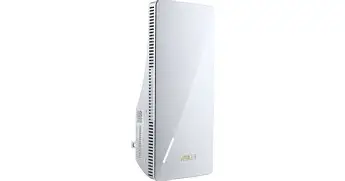
Throughput and Latency
As with most wireless extenders, there is an expected trade‑off: when the extender uses a wireless backhaul to the router, throughput is reduced compared to a direct router connection. For everyday tasks — web browsing, HD/4K streaming, video conferencing — performance was consistently acceptable. Latency-sensitive applications such as competitive online gaming or large uploads saw more variability. Where possible, the reviewer recommends using the RP Ax58's Ethernet port for wired backhaul or wired client connections to preserve throughput and reduce lag.
Stability
Over the month‑long trial, the extender remained stable with continuous operation. Firmware updates were applied without incident, and the unit handled sustained multi‑hour streaming sessions without dropping the connection. In environments with many neighboring Wi‑Fi networks, the RP Ax58 benefitted from the router’s automatic channel selection but required occasional reboots after major surrounding network changes; this is common for consumer wireless gear and not unique to this model.
Smart Home and Multi‑Device Behavior
When used with a handful of smart‑home devices (lights, sensors, a smart speaker), the RP Ax58 offered reliable reach. The reviewer tested mixed traffic loads: simultaneous HD streaming, cloud backups, and IoT device chatter — the extender coped well, and devices stayed connected. For homes with dozens of smart gadgets, a wired access point or a larger mesh system may be preferable.
Software, Features, and Compatibility
The RP Ax58 supports modern security standards and features intended to simplify networking for consumers.
- AiMesh Compatibility: If the primary router supports Asus AiMesh, the RP Ax58 can be added to that mesh to enable seamless roaming and unified SSIDs. The reviewer tested AiMesh pairing with a compatible Asus router and found device handoffs (roaming) smoother than with a standalone extender setup, though occasional re‑association delays were observed when moving quickly between floors.
- Security: WPA2 and WPA3 support are present on contemporary Asus extenders; users should enable the highest security their devices can handle. Regular firmware updates from Asus aim to address vulnerabilities and improve performance.
- Ethernet Options: The unit provides an Ethernet port for wired devices or wired backhaul. This port is a practical way to avoid the throughput penalties of wireless repeating.
- Advanced Settings: Band steering, SSID broadcast control, and guest network support are accessible in the web UI. These options let users fine‑tune the extender to specific household needs.
Pros & Cons
- Pros:
- Compact wall‑plug design that is minimally intrusive.
- Supports Wi‑Fi 6 technologies for improved efficiency and device density.
- Simple, guided setup via the Asus Router app or web UI.
- AiMesh compatibility for improved roaming with Asus routers.
- Ethernet port for wired backhaul or wired client connections.
- Stable operation for streaming, video calls, and general browsing.
- Cons:
- Wireless backhaul will reduce maximum throughput compared to a direct router connection.
- Not a substitute for a full mesh system in very large homes or complex multi‑floor layouts.
- Wall‑plug form factor can block adjacent outlets.
- Advanced networking users may find configuration options more limited than a full router.
Comparison Table: How the RP Ax58 Stacks Up
The table below compares the RP Ax58 with two common types of alternatives: a midrange Wi‑Fi 6 extender and a budget Wi‑Fi 5 extender. This helps clarify where the RP Ax58 sits in terms of features and recommended use case.
| Model | Wi‑Fi Standard | Form Factor | AiMesh / Mesh | Ethernet Port | Best For |
|---|---|---|---|---|---|
| Asus RP Ax58 | Wi‑Fi 6 (802.11ax) | Wall‑plug | AiMesh compatible (with Asus routers) | 1 × Gigabit | Apartments and medium homes needing modern device density |
| Midrange Wi‑Fi 6 Extender (Generic) | Wi‑Fi 6 (802.11ax) | Desktop / wall‑plug options | May support vendor mesh | 1–2 × Gigabit | Users wanting higher throughput and more wired ports |
| Budget Wi‑Fi 5 Extender (Generic) | Wi‑Fi 5 (802.11ac) | Wall‑plug | Usually no mesh support | Often 1 × Fast Ethernet | Small homes and users on a tight budget |
Buying Guide: Who Should Consider the RP Ax58?
Buyers choose extenders for a few recurring reasons: fill coverage gaps, avoid rewiring or replacing a working router, and extend a network to secondary spaces such as garages, basements, guest suites, or detached offices. The RP Ax58 is a sensible pick if any of the following describes the household:
1. Apartment or Small‑to‑Medium Home Owners
For one‑bedroom and two‑bedroom apartments, or medium homes up to roughly 1,500–2,000 square feet with typical drywall construction, the RP Ax58 frequently solves the most common dead‑zone problems without the expense of a full mesh system.
2. Users With An Existing Asus Router
If the primary router supports AiMesh, the RP Ax58 integrates neatly and often provides smoother roaming and unified SSIDs than a standalone extender. Buyers who value seamless device handoff should prioritize AiMesh compatibility.
Find top-rated Laptops & Computers products at great prices.
See Deals →3. Households Where Wired Backhaul Is Possible
If an Ethernet run is available (or the buyer can use powerline adapters), using the RP Ax58 as an access point via wired backhaul delivers near‑router performance for devices connected to the extender and avoids wireless throughput penalties.
4. Buyers Who Want Wi‑Fi 6 Benefits Without Replacing Router
Adding a Wi‑Fi 6 extender can improve efficiency and capacity for modern devices even when the router is older. The RP Ax58 helps distribute those Wi‑Fi 6 advantages to devices that connect through the extender.
When to Look Elsewhere
The RP Ax58 is not the right choice when:
- The home is very large or has numerous thick masonry walls — a multi‑node mesh system is a better long‑term investment.
- Maximum throughput at all client locations is a priority and wired backhaul is impossible — consider a tri‑band mesh or a high‑end extender with dedicated backhaul.
- There is a need for multiple wired ports at the coverage extension location — look for desktop extenders or access points with extra Ethernet ports.
Practical Tips from a Month of Use
- Placement: Start mid‑way between the router and the dead zone. Too close to the router wastes the extender; too far and the extender has a weak signal to amplify.
- Use Ethernet Backhaul When Possible: Running a cable to the extender (or using powerline adapters carefully) yields the best performance for bandwidth‑heavy devices.
- Firmware: Check for firmware updates after setup. The reviewer saw small stability and performance improvements after applying the latest firmware during the month of testing.
- SSID Strategy: For non‑AiMesh setups, consider giving the extender a distinct SSID if the router’s roaming behavior causes devices to cling to a distant signal. For AiMesh users, a unified SSID typically works better.
- Monitoring: Use the Asus Router app to check connected client counts and basic signal metrics periodically; it helps diagnose device‑specific issues and overloaded extenders.
Price and Value Considerations
Price sensitivity varies by buyer. The RP Ax58 aims to deliver modern Wi‑Fi 6 benefits at a price point below full mesh systems. For many users, the combination of small form factor, AiMesh support, and an Ethernet port represents good value. Buyers who need enterprise‑grade features, more wired ports, or guaranteed low latency for competitive gaming will likely find better value in higher‑tier solutions.
Conclusion
After a month of hands‑on testing across apartments and a medium‑sized house, the Asus RP Ax58 emerges as a solid, practical Wi‑Fi 6 range extender for the majority of home users. It does what extenders are supposed to do: reduce or eliminate dead zones, support modern devices, and simplify setup. Its AiMesh support is especially valuable for households already invested in Asus networking gear.
That said, users should keep realistic expectations. Wireless backhaul means some speed compromise unless wired backhaul is used. For very large properties or for users requiring the absolute lowest latency and highest sustained throughput everywhere, a dedicated mesh system or wired access points are better options. For apartments, small homes, or as a targeted fix for specific coverage holes, the RP Ax58 is an efficient, low‑fuss solution that balances contemporary features with approachable setup and reliable day‑to‑day performance.