Thermal Master P3 Thermal Camera Specs, Features, and Value: Is it worth the price tag?
In the rapidly evolving landscape of infrared technology, a new class of devices has emerged to bridge the gap between expensive, bulky professional thermographic cameras and consumer-grade gadgets. The Thermal Master P3 stands at the forefront of this evolution, offering a high-resolution smartphone-attached thermal imaging solution that promises professional performance without the professional price tag. As thermal imaging becomes increasingly vital for home inspections, electrical troubleshooting, automotive diagnostics, and outdoor explorations, tools like the P3 are being scrutinized by both hobbyists and trade professionals. This detailed analysis explores whether this compact powerhouse truly delivers on its technical promises and if it justifies the investment for those seeking clarity in the invisible spectrum.
Understanding the Core Technology
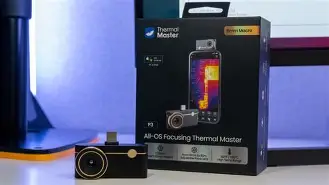
The Thermal Master P3 is a plug-and-play thermal imaging camera designed primarily for smartphone integration. Unlike standalone units that require their own processors, screens, and battery systems, the P3 leverages the immense computing power and high-resolution displays of modern mobile devices. This design philosophy allows the manufacturer to focus almost entirely on the quality of the thermal sensor and the optical assembly. By offloading the "smart" features to the user’s phone, the device remains incredibly portable while offering a user interface that is significantly more fluid and intuitive than the clunky buttons found on many traditional handheld thermal imagers.
At the heart of the P3 is a Long-Wavelength Infrared (LWIR) sensor. This technology detects infrared radiation in the 8 to 14-micrometer range, which is the heat emitted by objects rather than the light reflected off them. Because it does not rely on visible light, the P3 can "see" in total darkness, through smoke, and even detect thermal anomalies hidden behind thin surfaces like drywall or within electrical panels. The precision of this sensor determines the "thermal sensitivity" and "spatial resolution," two metrics that ultimately decide whether a camera is a useful diagnostic tool or merely a high-tech toy.
Detailed Technical Specifications
To evaluate the value of the Thermal Master P3, one must first look at the raw data. In the world of thermography, resolution is king. Many entry-level thermal cameras offer resolutions as low as 80x60 or 160x120 pixels. The P3 jumps significantly ahead of these benchmarks.
The device features a native thermal resolution of 256x192 pixels. While this might sound low compared to digital photography, in the infrared world, this provides over 49,000 individual temperature measurement points. This density is sufficient for identifying small components on a circuit board or spotting a leak in a radiant floor heating system from several feet away. Furthermore, the P3 typically operates at a frame rate of 25Hz. This is a critical distinction; many restricted thermal cameras are capped at 9Hz due to international export regulations. The 25Hz refresh rate ensures that the image is smooth and responsive, which is essential when tracking moving objects or scanning a large area quickly.
The temperature measurement range is another area where the P3 demonstrates its professional aspirations. It can typically measure temperatures from -20°C to 550°C (-4°F to 1022°F). This broad range makes it versatile enough for both HVAC technicians checking refrigerator evaporator coils and mechanics inspecting glowing hot exhaust manifolds. The accuracy is generally rated at +/- 2°C or 2%, which is the industry standard for high-quality diagnostic thermography.
Features and Software Integration
The hardware is only half of the story. The Thermal Master P3 relies on its companion app to interpret the data coming from the sensor. Modern smartphone apps for thermal cameras have become incredibly sophisticated, and the P3’s software suite is no exception. It allows users to switch between various color palettes, such as Ironbow, Rainbow, White Hot, and Black Hot. Each palette serves a specific purpose; for instance, "Ironbow" is excellent for general home inspections, while "White Hot" is often preferred by search and rescue teams for its high contrast in outdoor environments.
One of the standout features is the ability to perform real-time analysis. The app can highlight the hottest and coldest points in the frame automatically. Advanced users can also place custom spot meters, line profiles, or area boxes to monitor specific zones. This is invaluable when comparing the temperature of three different electrical breakers simultaneously to see if one is drawing excessive current. Additionally, the software facilitates "Image Fusion" or "Dual Spectrum" viewing. This technology takes the outline from the smartphone’s standard visible light camera and overlays it onto the thermal image. This provides much-needed context, allowing the user to see exactly where a hot spot is located relative to labels on a panel or studs in a wall.
Find top-rated Cameras & Photography products at great prices.
View Offers →Real-World Use Cases
Residential and Commercial Inspections
For home inspectors, the Thermal Master P3 is a transformative tool. It can identify missing insulation in walls that would otherwise be invisible to the naked eye. By scanning a ceiling after a rainstorm, an inspector can find moisture patterns that haven't yet resulted in a visible stain. The high sensitivity allows for the detection of "thermal bridging," where cold air is leaking through structural gaps, helping homeowners improve their energy efficiency and lower utility bills.
Electrical and Mechanical Maintenance
Electricians use the P3 to find loose connections or overloaded circuits. A loose wire in a terminal block will generate heat due to increased resistance; the P3 spots this immediately, potentially preventing an electrical fire. Mechanically, it is used to check for bearing wear in motors or to ensure that cooling systems in industrial machinery are functioning correctly. The ability to record video while performing these checks allows technicians to show clients exactly what the problem is, providing visual proof of a necessary repair.
Outdoor and Security Applications
Beyond professional trades, the P3 has significant utility for outdoor enthusiasts. It can be used for wildlife observation at night, as the heat signature of an animal stands out vividly against the cool night background. It also serves as a potent security tool, allowing a user to scan their property for intruders in pitch blackness without the need for bright floodlights that would give away their own position.
Comparison of Thermal Camera Tiers
To understand where the Thermal Master P3 fits into the market, it is helpful to compare it against other common categories of thermal imaging devices. The following table highlights the differences between entry-level, mid-range (where the P3 resides), and high-end professional units.
| Feature | Entry-Level (Budget) | Mid-Range (Thermal Master P3) | High-End Professional |
|---|---|---|---|
| Thermal Resolution | 80 x 60 to 120 x 90 | 256 x 192 | 640 x 480 and above |
| Frame Rate | 9 Hz | 25 Hz | 30 Hz to 60 Hz |
| Temperature Range | Up to 150°C | Up to 550°C | Up to 1500°C+ |
| Lens Focus | Fixed Focus | Manual/Adjustable Focus | Interchangeable Lenses |
| Accuracy | +/- 3°C to 5°C | +/- 2°C | +/- 1°C or better |
The Buying Guide: What to Look For
When shopping for a thermal camera like the Thermal Master P3, there are several nuances that buyers often overlook in favor of the headline resolution numbers. If you are trying to decide if this specific model meets your needs, consider the following factors:
Manual Focus vs. Fixed Focus
Many lower-cost smartphone thermal cameras use a fixed-focus lens. This means that if you get too close to a circuit board, the image will be blurry. The P3 often features a manual focus adjustment. This is a critical "pro" feature. It allows you to dial in the sharpness whether you are 6 inches away from a PCB or 50 feet away from a transformer. If your work involves macro-level inspections, manual focus is non-negotiable.
Compatibility and Connectivity
The P3 typically connects via USB-C or Lightning. However, users must ensure their phone supports USB On-The-Go (OTG) and has sufficient processing power for the app. Furthermore, consider the physical fit. Some phone cases are too thick for the camera's connector to seat properly, which may require an extension adapter. The P3's compact form factor is a benefit, but it does mean it relies entirely on the phone's battery. While the camera's draw is relatively low, long inspection sessions will drain your phone faster than usual.
Looking for the best Cameras & Photography deals on Amazon?
Browse Now →Emissivity Settings
Not all surfaces emit heat in the same way. A shiny metal pipe might reflect the heat of the person holding the camera rather than showing its own temperature. This is known as emissivity. High-quality cameras like the P3 allow you to adjust the emissivity setting in the software. This ensures that when you are measuring different materials—such as wood, water, or matte plastic—the temperature reading remains accurate. Buyers should avoid any camera that does not allow for emissivity adjustment, as the data provided will be unreliable for professional use.
Pros and Cons
Every piece of technology involves trade-offs. The Thermal Master P3 is designed for a specific balance of portability and power. Here is a breakdown of its strengths and weaknesses:
- Pro: High Resolution for the Price – Providing 256x192 resolution at this price point puts it significantly ahead of legacy competitors who often charge more for 160x120 sensors.
- Pro: Smooth 25Hz Video – The high frame rate makes a massive difference in user experience, eliminating the "laggy" feel of 9Hz cameras.
- Pro: Manual Focus Capability – The ability to focus manually allows for crisp images across a wide variety of distances and applications.
- Pro: Compact and Portable – It fits in a pocket and turns any modern smartphone into a high-end diagnostic tool without the weight of a dedicated "gun-style" camera.
- Con: Reliance on Smartphone – If your phone dies, is dropped, or the app becomes incompatible with a new OS update, the camera becomes unusable.
- Con: Connector Fragility – As with all smartphone-mounted accessories, the USB-C or Lightning connector is a potential point of failure if the device is bumped or dropped while attached.
- Con: No Internal Battery – It draws power from your phone, which can be a drawback for all-day field work without access to a charger.
The Value Proposition: Is it worth the price?
Determining value requires comparing the cost of the Thermal Master P3 to the cost of not having it. For a professional HVAC technician, the ability to find a refrigerant leak or a failing compressor in minutes rather than hours can pay for the device in a single week through saved labor time. For a homeowner, discovering a major insulation gap or a hidden water leak before it causes structural rot can save thousands of dollars in future repairs.
When compared to others in its class, the P3 sits in a "sweet spot." It is more expensive than the entry-level 80x60 units that are mostly used for novelty, but it is vastly more affordable than dedicated Flir or Fluke handheld units that offer similar resolution. The build quality of the P3 is generally robust, often featuring metal housings rather than the cheap plastic found on budget alternatives. This suggests a level of durability intended for toolboxes rather than just desk drawers.
For the average DIY enthusiast, the price tag might seem steep for a tool that gets used once or twice a year. However, for anyone who regularly deals with home maintenance, electronics, or outdoor activities, the P3 offers a level of insight that was simply inaccessible to the public a decade ago. It transforms "guessing" into "knowing."
Conclusion
The Thermal Master P3 is a testament to how far infrared technology has come. By combining a respectable 256x192 sensor with a high refresh rate and a focusable lens, it achieves a level of performance that challenges the dominance of traditional thermal imaging giants. It is not a toy; it is a legitimate diagnostic instrument capable of providing deep insights into the physical world. While the reliance on a smartphone brings some inherent risks regarding battery life and physical connection, the benefits of using a high-resolution mobile screen and a modern interface far outweigh the downsides for most users. Whether you are a professional looking for a highly portable secondary camera or a dedicated hobbyist who demands accuracy and clarity, the P3 represents an excellent balance of technical specs, practical features, and overall value. In the question of whether it is worth the price tag, the answer is a resounding yes for those who value precision and want to see the world in a way the human eye never could.